Reality Check

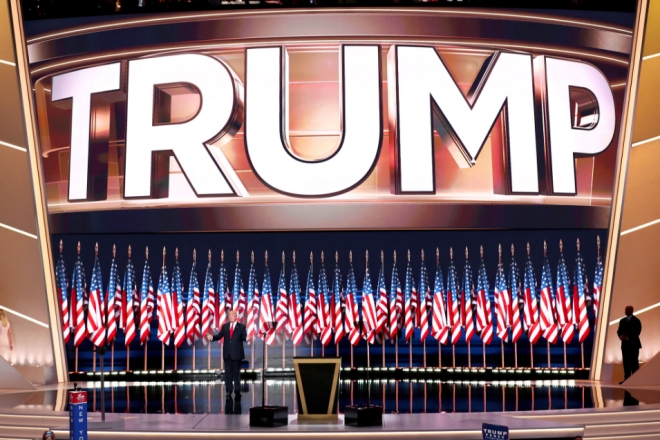
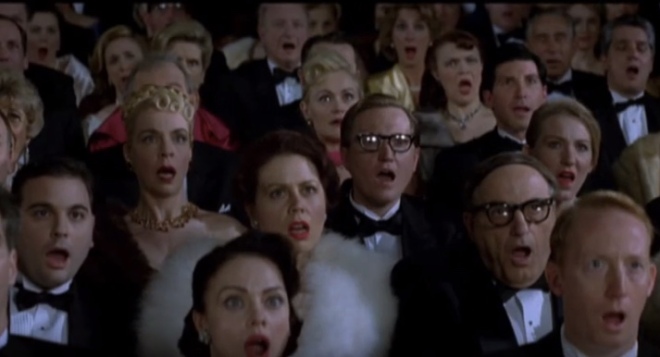
trump_stagespringtime-for-hitlerMore than a week has passed since that most surreal of mornings when many of us woke to find that the world was entirely different to the one in which we had gone to sleep. My initial shock at Donald Trump’s election has been slowly replaced by a kind of frozen comic detachment at its continuing awfulness. As if with each successive news item featuring Trump I’m being made to watch Mel Brooks’ Springtime for Hitler over and over again.

It took me days to pluck up the courage to ring my American friends and ask them how they were feeling. “You know what?” my Chicago-born girlfriend said. “It feels like ever since Nixon, we’ve been waiting for the other shoe to drop. Well finally it has. No one is pretending that the American Dream exists any more. That’s it. We’re done.”

I’m not sure she’s right. I think the American Dream is still live and kicking. It’s just a matter of defining our terms.

This was James Truslow Adams’ definition in 1931:

“Life should be better and richer and fuller for everyone, with opportunity for each according to ability or achievement.”

We have been led to believe that this dream of prosperity is rooted in the Declaration of Independence, which proclaims that, “all men are created equal” with the right to “life, liberty and the pursuit of happiness.”

Clearly the American Dream holds within it an opportunity for two radically different interpretations, each one favouring opposing aspirations – towards equality and towards wealth. Given this inherent paradox, which of the two definitions of the word dream now best applies to the American Dream? Is it a cherished aspiration, ambition, or ideal (that every citizen should be treated as equal) or is it an unrealistic or self-deluding fantasy (that everyone should be wealthy)?

The morning after the election, in the climate of barely contained hysteria that was characterising most media output on the subject, I was asked to write about the possibility of Marine Le Pen becoming the next president of France. I declined for a number of reasons but if I had written it, this is what I would have argued: beyond the simplistic observation that in the current climate anything is possible, it is my view that thanks to the two rounds of the French electoral system and the strong likelihood of a republican pact against her in the second round, Le Pen’s chances are pretty slim. The editor would not have found this argument very sexy and in this day and age, who wants well-founded when you can have sexy?
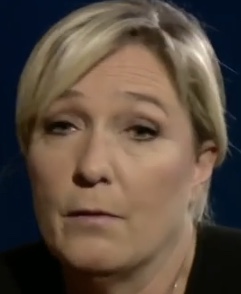
marine-1Marine Le Pen on the BBC

The Sunday after, I watched the BBC’s revered Andrew Marr interviewing Marine Le Pen on his Sunday morning programme. He was widely criticised for having invited an extreme-right politician on Remembrance Sunday but he argued well in favour and I was confident we would all see her wriggling on his hook. Nothing of the kind. Marine Le Pen did not wriggle. She cut through the water like a marlin, dragging Andrew Marr behind her.

Of the two, Le Pen, not Marr was the more considered and plausible. His opening question was soft: “A lot of people are saying that the victory of Donald Trump makes the victory of Marine Le Pen in France much likelier. Do you agree with them?” Her answer: “He made possible what had previously been presented as impossible, so it’s really the victory of the people against the elite.”

Rather than ask how on earth Donald Trump with all his billions is not a member of the elite, Marr pitched this rather pathetic question instead: “You have the reputation as a party of being racist and your own father used the phrase ‘a detail of history’ to describe the holocaust. Have you really changed as a party?” I groaned. In the 30-odd years since her father made that remark she’s had plenty of time to build an excellent defence. “Listen,” Le Pen replied, summoning all her indignation. “I cannot let you say something so insulting. As it happens, the National Front has never been guilty of racism and in fact I would like you to tell me exactly what sentence, what proposal in the National Front’s programme is a racist proposal.”

Well, for one, in 2010 Le Pen compared the practice of French Muslims – who, unable to find space in mosques, were praying in the streets – to the Nazi occupation of France. But Marr, instead of coming back with a list of all such nasty racist slips and slurs that she and her party have made in recent years, let her move on to the injustices of globalisation and thus talk straight past him to the many in Britain and beyond who hanker to return to a golden past.

Watching Marr’s hubris in interviewing Le Pen without having done his homework was another Springtime for Hitler moment for me. As I watched, ironic detachment kicked in to shield me from disgust and despair. Apparently, in our current world of surface and posturing it didn’t really matter that Le Pen had got away with talking about the need for French Muslims “to comply with our codes, our values, our French way of life” (“notre mode de vie francais” was mistranslated as “our French lifestyles”). Marr didn’t bat an eyelid at this. Instead he allowed her to couch herself in another layer of respectability. Clearly for him, the coup was simply having her on his programme.

I, with most of my peers, have become addicted to box sets so I know from my own lifestyle over the last decade, that there has been a gradual slide away from the real, the concrete, the factual, towards the heightened, the fantastical, the entertaining. If we, the soi-disant chattering classes prefer to numb our minds every evening Netflix’s beautifully accomplished The Crown rather than meet up and talk about the disaster unfolding in the world around us, then what hope do we have? I fear my Springtime for Hitler moments are a kind of existential paralysis in the face of the real and that Trump’s victory is not just an American symptom but a global symptom. A sign of the times. It’s the triumph of appearance over reality, the lure of the dream. And that’s “dream” as in self-deluding fantasy, rather than aspiration, ambition or ideal.

A version of this post was published in Prospect Magazine‘s online edition on 17/11/2016 under the title, ‘Watching the World Fall Apart’.

Farewell chivalrous knight of Islam

Malek Chebel

Photo by Benjamin Chelly

The wise and wonderful Algerian-born thinker, Malek Chebel – who argued valiantly for an enlightened Islam, himself a shining light in French intellectual life – has died.

We met the week after the Charlie Hebdo attacks and became friends. I shall miss him.
This is the interview of our first meeting:

An emotional shock often makes us look for some kind of echo, some proof in the world around us that everything has changed but the morning after last week’s terrorist attacks on their city, Parisians woke to pristine winter sunshine and a clear blue sky.

Crossing town to meet Malek Chebel, one of France’s most prominent Muslim intellectuals – a man who always meets fanaticism, wherever it hails from, with the same reassuringly sagacious smile – I thought of the tears in my daughter’s voice when she’d called me from work the day before. Her office is not far from Charlie Hebdo‘s and she said she could hear the sirens. “No one’s scared, though,” she told me. “People are crying at their desks.” That evening she left her own desk and went straight to the Place de la République, along with about 35,000 others, and called me from the vast square.

“It’s such a beautiful, poignant atmosphere. And it has nothing to do with patriotism or politics. It really gives you hope.” I didn’t ask her how many Muslims she thought might be out on that square, but that was what I was thinking as I spoke to her.

I met Malek Chebel in the “English Bar” of the Hotel Raphael in the 16th arrondissement – a quiet, oak-panelled room with crimson velvet upholstery and antique Persian rugs, designed to look like the French idea of an English gentleman’s club. Chebel was visibly delighted to be there. It was only 10 o’clock and he’d already given four interviews. “I’m usually called in at times like these to calm things down,” he said. “Out there it’s a Greek tragedy, everyone’s passions unleashed.”

Later that afternoon he’d been invited to a televised debate with the right-wing polemicist, Eric Zemmour, whose terrifyingly successful “misery essay”, Le Suicide Français (which has sold 400,000 in three months) argues that ever since de Gaulle, French identity has been irredeemably corroded by feminists, homosexuals and Arabs. That day in particular, I looked forward to seeing Chebel dismantle Zemmour’s “passions” with his usual skill and charm.

With his religious upbringing in Algeria, followed by his two French doctorates in social anthropology and psychology, Malek Chebel has passports into both worlds. He earned his reputation in Arab society by translating the Koran into French in an edition that won the approval of all the key Muslim clerics from the Maghreb to Indonesia. But he has also tackled the two subjects closest to French hearts: sex and psychoanalysis.

Chebel’s titles include The Arabic Kama Sutra, Arab Eroticism, and the just-published The Islamic Unconscious. Impressively, he has to date no fatwa on his head. “That’s because few Muslims have actually read the Koran. It’s a very, very difficult text. I gave 10 years of my life to studying it and that earned me people’s respect.”

Using his erudition to spread a message of liberation from what he calls the dangerous ideologies that have taken possession of his religion, Chebel regularly cites the learned and inclusive Islamic society that was established under the Abbasid caliphates of the Middle Ages as proof that Islam can be reformed.

I asked Chebel if he’d experienced much racism in his adopted land. He told me that when he’d first arrived in France from Algeria in the mid-1970s he’d gone to see the Alps with his girlfriend at the time. They had stopped in a remote village and an old woman, after circling him several times, had approached him and offered him some household bleach for his skin. “Something remains of that woman’s desire in many French people – the desire to wash us all whiter than white,” he said with a forgiving smile.

When I asked him whether he thought France was Islamophobic, his answer was coy and rueful: “I’m afraid there’s a subtle system of thought in place here, which lends itself to an Islamophobic atmosphere.” Chebel was talking about France’s obsession with la laïcité, which in English means “secularism” – as in the separation of church and state. This translation, however, doesn’t quite cover it. Today, the word in French carries with it a history of deep antagonism and mutual distrust between the worlds of political belief and religious faith. It’s a visceral hatred that was fuelled by the excesses of the Catholic church under the ancien régime, nurtured by the Revolution, reignited under the Third Empire and, even after the official separation of church and state in 1905, has flared up regularly ever since. “Unfortunately, la laïcité has become a dogma in this country which often masks a posture of intolerance.”

This intolerance is not only expressed towards Muslims. A Jewish friend of my daughter’s, who has recently begun practising her religion in defiance of the disapproval of her forcefully laïc parents, as well as nearly all her friends, told me that to be a practising anything in this country requires real strength of character.

That laïcité might be seen as a form of oppression would be deeply offensive to many French secularists who pride themselves on their egalitarian values. These are the people who supported the ban on French Muslim girls wearing their headscarves at school, and of course the law against wearing a burka in public. Their main argument in support of these measures (which many outside France perceive as an infringement of personal liberty) is somewhat paradoxical: young French Muslim women must be protected from patriarchal oppression (of which the headscarf is a symbol) by being told what they can or can’t wear in public.

In fact, as Chebel pointed out, France’s allergy to the Muslim headscarf may have more to do with France’s own patriarchal traditions, which make the idea of a woman choosing to cover up her charms distinctly unpalatable.

“Perhaps Islam’s function in the French collective unconscious is to mask its own regressive tendencies,” Chebel suggested. “The French patriarchy can hide behind Islam, which everyone thinks of as a patriarchal and misogynistic religion.” He said he was against headscarves in schools at first and supported the ban, but has since changed his mind. “When I realised that many Muslim girls wear the headscarf because it made them feel more comfortable, I could no longer oppose it.”

What’s not often discussed here is whether religious intolerance is just another form of racial discrimination. According to a study carried out by the French institute of national statistics in April 2014, a candidate with an Arabic-sounding name here is still considerably less likely to be called back for interview, even if he or she has better qualifications, than a rival with a European-sounding name.

When I mentioned the idea of positive action to counteract this kind of discrimination, Chebel expressed the view of the majority of French people: “Positive action signals an admission that, in a society of equal opportunity, the person you’re favouring is weaker. It’s a mark of disdain.”

Chebel’s argument echoes the prevailing egalitarianist orthodoxy – the same orthodoxy that supports France’s law against gathering data about ethnic minorities, even as a tool to combat discrimination. The argument is that the French are so attached to the ideal of equality before the law that they perceive any departure from that principle as a form of injustice.

Chebel’s caution towards his host culture is very occasionally replaced by a gentle mockery. When I brought up the horror that had spread across France when it was revealed that non-Muslim children had been given halal meat in their school cafeterias, he said, “The reason for the violence of that reaction was their unconscious belief that we were invading them from the inside. And we were using meat to do it, which of course is sacred here.”

As we settled into the conversation and Chebel realised, perhaps, that my prejudices might not be the ones against which he had armed himself so carefully, he began to lower his guard. He confessed that, wedded as he was to the idea of freedom of expression, he’d felt that the Charlie Hebdo cartoons had indeed been offensive. “There are millions of Muslims in this country who felt deeply insulted. Of course death should never be the consequence, but we must have more understanding.

“In today’s multicultural society, France’s secularist doctrine creates an unbearable tension and behind this dogmatic form of laïcité there often lies a fundamental lack of acceptance of other cultures. The trouble is,” he added. “France no longer just wants integration, it wants assimilation and that’s just not acceptable. I think the British model, which practices tolerance towards all minorities, is wonderful. But we’re still a long way from that.”

When it was time for him to face Zemmour, we walked together to the nearest Metro station. On the Place de L’Etoile, a young man recognised him, came up to us and made a heartfelt speech about his horror at the terrorist attacks: “I’m a Muslim but I’m well-integrated,” he began, his hand on his heart. He went on to say how the shootings had made him feel physically sick, how that wasn’t Islam, how grateful he was to France for welcoming him in (from Morocco), for giving him a job (he was a waiter in a nearby café), and for helping him to educate his children.

After Chebel and I had said goodbye, I remembered the young man’s words: I’m a Muslim but I’m well-integrated. I tried to imagine a British Muslim making that kind of statement today. I realised that it was something you might have expected to hear back in the 1960s from someone who’d just moved to Britain from Pakistan.

It’s true, I thought as I descended the steps into the Metro – for all France’s beautiful ideas and high moments of popular fervour, there is, in practice, a long way to go before its practising Muslims will feel at home.