‘Parfaite,’ a one-act play about a less-than-perfect mother-son relationship…

Pierre Francois Garel

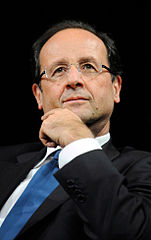
Pierre Francois Garel (Jack)
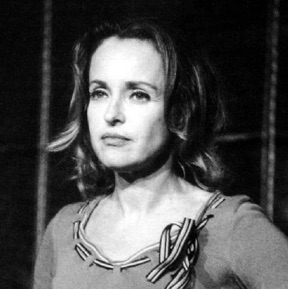
Fanny Cottencon

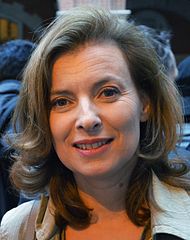
Fanny Cottencon (Claire)

Parfaite (Perfect) is my first play, written in French for Le Paris des Femmes, a festival created by three women – Michele Fitoussi, Veronique Olmi et Anne Rotenberg  – to promote women’s writing in French theatre. (Apparently 85% or French plays are still written by men).

Stéphane Engelberg, director of the Theatre des Mathurins in Paris, offers up his theatre for three nights in a row every January for a performed reading of the nine, new plays that have been selected.

Designed to be a short, sharp shock, Parfaite, tackles the cruel mechanism that the family can be.

Michele Fitoussi, Veronique Olmi, Anne Rotenberg

I had an enormous amount of help and encouragement for these three wonderful women, each gifted artists in their own right. Next year in January 2016, Le Paris de Femmes will, with Director open the doors of the Theatre des Mathurins to 9 more female authors, some established, some untried, in order to promote women writers in an industry that is still 85% male.

To see my words read out, felt and experienced by three actors of the calibre of the people who were chosen for Parfaite, was a powerful experience as well as a lesson in detachment.

Gaite Montparnasse 1

Below is an interview (in French) with Jean-François Bensahel, director of DSO-Interactive, one of the two companies (with Durance) that sponsored Le Paris des Femmes this year.

Jean-François Bensahel, PDG du groupe DSO-Interactive à Lucy Wadham, auteure et lauréate du prix Theatre, DSO.

Lucy, pouvez-vous vous présenter brièvement ?
Romancière avant tout, je travaille aussi comme journaliste en France pour la presse britannique depuis 28 ans. Je suis la quatrième enfant d’une fratrie de 6 personnalités fortes. L’écriture m’a donc servie, depuis mon enfance, d’armure ou de refuge. Même lorsque j’écris un polar qui demande une trame haletante, ce sont les liens familiaux qui m’intéressent avant tout.

Quelle est la vision d’une British sur la France d’aujourd’hui ou sur la culture en France ?
Ce qui me frappe sur la France d’aujourd’hui, c’est la peur. La peur surtout, je pense, de la mondialisation et de ce qui la caractérise (révolution numérique, immigration, brassage ethnique et culturel). Il y a en revanche beaucoup de Français qui accueillent cette évolution à bras ouverts, comme une délivrance de la stagnation culturelle. J’ai remarqué que cette crispation identitaire se trouve surtout chez les gens de mon âge et au-dessus – les baby-boomers et les soixante-huitards qui ont du mal à passer la main. Pourtant cette ‘génération Erasmus’ qui vient derrière nous est beaucoup mieux équipée pour trouver des solutions intelligentes et imaginatives à nos problèmes.

Vous avez écrit So French, l’amour vache d’une Anglaise pour la France. Avez-vous une anecdote à nous raconter sur une différence culturelle majeure qui vous a marquée en arrivant en France ?
Ce qui m’a marqué le plus au début était le coté ‘old school’ des relations hommes-femmes, mais surtout le manque de solidarité féminine. Les femmes françaises me paraissaient à cette époque enfermées dans une compétition sexuelle très fatigante. Pas intéressées par l’amitié, elles me snobaient dans les soirées et quand j’essayais d’engager la conversation, elles jetaient constamment un oeil par-dessus mon épaule, regardant les hommes défiler derrière moi comme on regarde s’écrouler une montagne d’espoirs érotiques. Souvent le soir en rentrant je pleurais dans les bras de mon mari. Tout ça est fini – ou bien parce que les Parisiennes ont changé ou bien parce que je ne représente plus de menace pour elles.

Interview croisée JF Bensahel/Lucy Wadham

Parfaite est votre première pièce de théâtre. Dans quelle mesure cela diffère de l’écriture de romans ?
Ca prend moins longtemps ! Et puis son immédiateté demande une grande rigueur et une économie d’expression que j’ai trouvées très excitantes. J’avais hâte de recommencer, alors je suis en train d’en
écrire une autre.

A votre avis, que peut apporter un Festival comme le Paris des Femmes ?
Personnellement, je crois beaucoup à ce genre d’initiative. Dans un contexte aussi désastreux pour les femmes écrivains que le milieu théâtral français, j’estime que l’on peut justifier un petit coup de pouce.
La crispation dont j’ai parlé plus haut autour de l’identité française s’applique également au modèle patriarcal qui est encore bien ancré en France.

Comment s’est passée la rencontre avec Michèle Fitoussi ?
Très bien, dès le départ. (Michèle n’a jamais fait partie de ces Parisiennes qui m’ont fait pleurer.) En dehors de son intelligence pétillante, Michèle a une énorme générosité d’esprit. En m’offrant cette chance d’essayer le théâtre pour la première fois, alors qu’elle savait que je n’avais jamais écrit en langue française, elle a pris un gros risque.

Parlez-nous de votre pièce en quelques mots.
Parfaite est une pièce dont le thème, la relation mère-fils, me trottait dans la tète depuis des années sans trouver d’issu, ni dans un roman, ni dans une nouvelle. Quand Michèle, Anne et Véronique m’ont
proposé cette aventure, j’ai su que mon moment était venu. Claire est une mère ‘parfaite’ – intelligente, sensible et cultivée. Son fils Ulysse est ‘un enfant à problèmes’ qui perd pied à l’adolescence et tombe dans la drogue. Suite à une bouffée délirante, il est hospitalisé et mis sous médicaments. Un jour il disparaît, rompant avec sa famille. La pièce commence au moment où il se réunit avec sa mère après 7 ans de rupture. Retrouvailles tendres qui se transforment en règlements de comptes affectifs.

Comment votre pièce s’inscrit-elle dans le thème « le Meilleur des Mondes » ?
Le Meilleur des Mondes m’a donné l’idée de situer la pièce en Lozère dans une communauté Ecoresponsable.
Loin de l’univers bourgeois parisien de son enfance, Ulysse – aujourd’hui appelé Jack – vit avec sa copine écossaise très proche de la nature. Il espère non seulement se reconstruire mais se réinventer à travers cette nouvelle vie ; spectacle insupportable pour Claire qui estime que son fils est dans le fantasme et le déni.

Que représente pour vous l’entreprise citoyenne ?
Je dois avouer que j’étais obligée de regarder la définition d’entreprise citoyenne sur Wikipédia. S’il s’agit de la prise en compte par la direction d’une entreprise de « l’intérêt de la société (au sens large) et de l’humanité au même niveau que son intérêt propre », je suis entièrement d’accord. J’ai remarqué, en passant, que la traduction anglaise pour entreprise citoyenne est « corporatif social responsabilité » ce qui relève d’un défi beaucoup moins ambitieux et moins glorieux.

Que représente pour vous l’attribution du Prix DSO Interactive ?
Ce prix représente une chance immense pour des écrivains comme moi parce qu’il donne confiance. C’est quand j’ai appris l’avoir gagnée que je me suis mise à écrire une autre pièce, qui s’appelle Départs. Sans quoi, ce n’est pas sûr que j’aurais osé.

En quoi l’entreprise peut-elle faire le lien avec l’art et la culture ? Est-ce vraiment utile ?
Je pense que c’est aux employés de DSO de répondre à cette question à l’issu de cette expérience DSO
– Paris des Femmes, qui pour moi a été merveilleuse.


Le Roi est mort

Hollande sans dents

We tend to believe that most aspects of political life are uniform across western societies – except, that is, when France hits the headlines. Just think of the leap of the imagination required to conceive of a British PM with one lover at No. 10 threatening to harm herself and another installed in a love nest round the corner and waiting to move in. The bedroom farce that has been carrying on at the head of the French state since the beginning of Francois Hollande’s presidency is all the more entertaining to British readers for being utterly incogitable.

But perhaps even more unimaginable is the public reaction to the account of the president’s baroque love life, written by his former lover, Valerie Trierweiler and published this week under the bitter-sweet title, ‘Merci Pour Ce Moment’ (Thanks for this moment). Not bothered most French people, by the details themselves, by president’s bodyguard delivering warm croissants to him and his actress lover, by the thwarted Valerie’s pathological jealousy, by her ‘suicidal gesturing’ or by Hollande’s (appalling) treatment of her. After all, seems to be the general view here, break-ups are invariably messy. As Socialist Speaker of the House, Claude Bartolone, said on TV when extracts of Trierweiler’s book were published Paris Match, “Do you know of any break-ups that go well? Everyone has their own suffering and their little story…”

So what are the French bothered about? Not presidential infidelity. They’ve come to expect a certain faithlessness in their heads of state. There were Giscard’s nocturnal sorties – made public by his post-coital, dawn run-in with a milk float, Chirac’s innumerable mistresses and Mitterrand’s secret love child, but none of these shenanigans inflicted any damage to the presidential aura. On the contrary, whenever a president of the Fifth Republic has been caught with his pants down, his approval ratings have improved. That’s why President Hollande believed, when his affair with the actress Julie Gayet was made public, that he could get away with his single, laconic and somewhat regal statement to the press: “I am making it known that I have put an end to my relationship with Valerie Trierweiller.”

Why, then, does the imperious Hollande continue to plummet in the polls? His voters aren’t bothered by what he might choose to do in private. What they’re bothered by, if you can believe this, is the deterioration of the dignity of the office he represents, occasioned by the playing out of his private persona in public.

French Prime Minister, Manuel Valls in reaction to Trierweiller’s book said this: “When you lower the public debate with outrageous attacks, or mix public and private lives, you debase the debate.” He then added, “I believe that the public debate, our public life needs respect. I would add another word: dignity. We need dignity.” Valls’ use of the word ‘dignity’ here is purposefully ambiguous. He means dignity as in ‘courtliness’ (when it comes to the president) and ‘seemliness’ (when it comes to anyone else).

This explains why the purveyor of all this smut, Valérie Trierweiler, is perhaps even more unpopular than the president. She’s being attacked on all sides by those – left and right, male and female – who are accusing her of lowering the tone. President of the far-right Front National, Marine Le Pen called her book ‘indecent’ and ‘a dishonour to France” and Philippe Bilger, public prosecutor and writer for Le Figaro, called it ‘vulgar’ and ‘exhibitionist.’ Female Le Monde columnists, Françoise Fressoz and Pascale Robert-Diard, were no less punishing: “Valerie Trierweiler is trying with this book to repair her image…as the hysteric, the husband thief, the vengeful woman. In defending herself, however, she merely records a presidency sunk by the private and personal.”

How to explain the vehemence and uniformity of these attacks? Valerie Trierweiler has broken a fundamental principal of French political life, an unwritten law inherited from the Ancien Regime and perpetuated by France’s revolutionary nomenklatura, that the private life – and by that I mean sex life – of a public figure must remain inviolable. Because she has broken this rule she is loathed. Not so much for her explosive personality – which had it stayed out of the papers, would have been whispered abroad in the corridors of power as fiery and passionate as opposed to hysterical and vindictive – but for having broken one of her nation’s most sacred taboos. And the violation of the omerta surrounding the sex lives of France’s politicians is all the more painful because it strikes at the very heart of a moral code that makes France so gloriously different from other western societies.

The French presidency must float far above the rabble, embodied in modern society by the media. But as political columnist with the left-leaning ‘Le Nouvel Observateur’, Bruno Roger-Petit pointed out this week, with Trierweiler’s book “…the president has been stripped naked. Naked as no president has been before him. The king’s body has been profaned. The king’s body vulgarised. The king’s body cheapened. The king’s body divested of grandeur. But above all, the King’s body ridiculed.”

There’s “neither bomb, nor scandal” in Trierweiller’s book, said Le Monde’s review, so why haven’t all these outraged commentators rallied round their ‘desacralised’ president? And why have his approval ratings, already catastrophic, dropped even further since the publication of the book?

Because embedded in this otherwise innocuous kiss-and-tell is a tiny revelation about Hollande that makes ‘Merci Pour Ce Moment’, not a bomb, but a political fire ship: “He presented himself,” writes Trierweiler. “As the man who doesn’t like the rich. In reality, the president doesn’t like the poor. This man, this man of the left, says in private, ‘the toothless,’ proud of his joke.” More than any revelation about his philandering, this aspersion cast on his left-wing moral credentials could bring down the President. Because until this moment, Hollande’s ideological copybook has, as Figaro columnist Vincent Tremolet de Villers pointed out this week, been impeccable: “There’s been not a word out of place. Full marks all round. A friend to the meek and lowly, the enemy of finance…”

In France, money and the desire to make it are perceived as much dirtier than sex. In a culture still steeped in its catholic heritage – a heritage that when it came to the matter of profit and commerce, merged perfectly with the revolutionary agenda – egalitarianism is the prevailing religion. That’s why no one blanched when Hollande, back in 2006, said on TV, “Yes, I don’t like the rich. I admit it.” Then again, in a speech in January 2012 that certainly helped carry him into power, “I like people while others are fascinated by money.”

In private then, according to his ex, the president mocks the poor and – echoing the 16th century French proverb, A man without money is like a wolf without teeth – calls them ‘the toothless.’ No one here cared much about his trysts with Julie Gayet or his bad behaviour towards Valerie Trierweiller but people do care about this. Within minutes of the revelation about Hollande’s ‘toothless’ remark, the social networks were ablaze. On Twitter the hashtag #SansDents soared to the top. Two new Facebook groups emerged, the left wing ‘Nous les Sans Dents’ (We the toothless) and the right wing, La Revolution des Sans Dents, (The Revolution of the Toothless), the tagline of which is, ‘better no teeth than no balls’.

Realising that this thing could bring their president down, his supporters scrambled to discredit Trierweiler’s remark and reaffirm his egalitarian faith: “I don’t believe in the phrase ‘the toothless,’” said Socialist MP, Jérôme Guedj. “Not coming from a socialist militant who has equality stamped into his body.” (There it is again, the king’s body.)

Meanwhile the long march of history continues and in spite of all this indignation, the ‘toothless’ of France, who unlike their ruling elite has left the eighteenth century for the twenty first – all rush out to buy Trierweiller’s memoir, pushing it to the top of Amazon France and, in one day, ousting the nation’s highest-selling book of the last five years: E.L. James’ international blockbuster, “Fifty Shades of Grey.’

A version of this post appeared in The Observer

Last Lady

In the aftermath of the Hollande-Gayet-Trierweiller sex scandal, or love vortex – depending on which side of the Channel you’re viewing things from – Le Nouvel Observateur asked me to comment on the following: Is the notion of ‘Premiere Dame’ (First Lady) an intrinsically sexist concept? Once I’d overcome my surprise that this should be a question (I was hard pushed to answer anything other than, ‘Er. Yeah?’) I began to wonder why it is that France is ahead of Britain and America in so many ways when it comes to gender equality (for the number of women in the cabinet, in parliament and in the boardroom) and yet far behind us in so many other ways – decades, possibly even half a century behind.

A vestige of the Ancien Regime like so many other features of the political and cultural life of this country, I was amused by the fact that the role of Premiere Dame is only now being called into question. In the grubby wake of the revelations about the President’s love life, his immediate entourage started wondering out loud on French radio whether the role of Premiere Dame shouldn’t be abolished altogether. After all, pointed out François Rebsamen, it was pretty undemocratic when you thought about it. I got the distinct impression, listening to this new debate that people felt things might have gone more smoothly for the President had Valerie Trierweiller not had her own desk at the Elysees. They’re wrong of course. Whether a Premiere Dame, or a premiere femme, a premiere concubine, or a premier reporter, Valerie Trierweiller could never have slipped discretely from public life, even if she’d wanted to. France is no longer an island, a national jardin secret safe from the prying eyes of the global media and both Francois Hollande and the French presidency itself seem to be having some difficulty in waking up to this horrific truth.

This reluctance to face reality is reflected in the sparse and laconic communiqués that have been offered to foreign journalists by the Elysees ever since the story broke. “It’s hilarious,” one British correspondent told me. “The message from the beginning has been, This doesn’t concern you. What are they thinking?!” The assumptions embedded in the palace’s statements, that the French presidency is somehow inviolable and that journalists should toe the line are indeed quite funny, particularly when set against the cold realities of the outside world, a world in which newspapers must do battle with the Internet without the benefit of state subsidies (in 2010 France spent about 1.8 billion euros in direct aid to the press) and where most commissioning editors, living in a state of constant fear for their jobs, start frothing at the mouth when a story like this breaks. Far from applauding the realities of the outside world, next time something like this hits the headlines, I would invite the Elysees Palace at least to face up to them.

In fact, the Premiere Dame has been a defunct notion ever since Cecilia Sarkozy chucked her husband while he was in office and marched off the stage. And it was only because Carla Bruni was such a consummate actress (remember her sudden change of wardrobe, her demure, Jackie Kennedy-like demeanour?) that the French were beguiled into thinking the role might still be plausible. Trierweiller, however, knew better. “I won’t be a potiche,” (trophy wife) she warned. This, despite her best efforts, was exactly what she became.

I suspect that the inner tension Valerie Trierweiller clearly felt in playing this archaic role, as well as the confusion that seems to be characterising French public’s view of her so-called ‘repudiation’ are indicative of another and far more entrenched French paradox: that of a patriarchy in denial. One of the last European countries to give women the vote, France has been playing catch up all through the Fifth Republic. Acutely aware of how she looks to her European partners, the land of liberty, equality and fraternity has managed, where the number of women MPs in parliament is concerned, to race past Britain and America in a very short space of time. Thanks largely to her bold and controversial parity legislation of 2000, 27% of France’s MPs are now women, while Britain is stagnating around 22% and America around 18%. With 50% women in his cabinet, Hollande is doing far better than Cameron, who has only 5 out of 23 female cabinet members. So back off, my French friends often tell me. Stop lecturing us about sexism when we have a proper political consensus surrounding gender equality.

The problem, though, is the glass ceiling, a reality that despite it not existing in the French language is there nonetheless. This invisible barrier is most keenly felt by members of what the French call ‘the parity generation,’ (young people who have benefited directly from parity laws of 2000). Indeed Nataf Vallaud Belkacem, Hollande’s Women’s Rights Minister and his government spokesperson, has clearly elaborated France’s latest battery of gender legislation (which focuses on the ‘private’ spheres of abortion and paternity leave in particular) to try to break through this glass ceiling for the benefit, if not of herself, then of future generations. Frequently vilified for her ambition, the 37 year-old Belkacem has had to develop nerves of steel to rise above the steady tide of sexism that laps around her ankles. Laurent Telo’s article in last week’s Le Monde, published under the title “Dents Longues et Langue de Bois”, a reference to the Minister’s perceived ‘long teeth’ (rapacious ambition) and ‘wooden tongue’ (tendency to stonewall) is a good example of this. In his piece Telo compares Belkacem to a child ballerina in a tutu balancing between the President’s views and those of the Prime Minister and calls her, in a particularly clumsy attempt, perhaps, to compliment her on her beauty, “the Natalie Portman of Moroccans” (Belkacem is of Moroccan origin).

For me, the clearest manifestation of the enduring sexism that still clings to France despite the best intentions of her political leaders was the spectacle of Segolene Royal’s campaign for the presidency. I realised watching that campaign that France was simply not as ready for a female president as she thought she was. Remember the sabotage, first from Royal’s male colleagues within the Socialist party? Remember Melanchon’s ‘The Presidency of the Republic is not a beauty contest,’ and Fabius’ ‘Who will look after the children?’ But perhaps more alarmingly there was a survey conducted by the Nouvel Observateur in which 100 famous women were questioned on their feelings about the socialist candidate. The vast majority disliked Royal and their principle objection seemed to have something to do with her being a mother of four. Former porn star, Brigitte Lahaie said, “For her [Royal], the image of the mother overrides the image of the woman.’ And Alina Reyes, a feminist author of erotic fiction, said, “Ségolène Royal is an archaic female figure who calls upon that part of France which falls back onto family values. With her it’s regressus in utero.”

It was particularly, I felt, that the porn star and the feminist both invoked the predominantly male fantasy of the castrating mother. Even Catherine Millet, author of ‘The Sexual Life of Catherine M.’ seemed to be relaying the deepest fears of the male psyche ‘For me, she’s a Robespierrette. This country doesn’t need a “Mummy” to give it moral lectures.’

But perhaps this is the crucial point: the pillars of the French patriarchy appear to be resting solidly upon the myths, inherited from Catholicism and broadly accepted by both men and women in this country, which perpetuate those old but entrenched ideas surrounding a woman’s mystique and the sex appeal that goes with it. There is unquestionably a consensus, particularly among French women of my generation and above, that it’s important to be first and foremost attractive to men. Motherhood with its attendant mess of pregnancy, birth and breastfeeding (to which, significantly, Simone de Beauvoir had an almost pathological repugnance) must never be allowed to interfere with a French woman’s sexiness. Indeed this, I’m sure, explains why so many of my French girlfriends find it so difficult to describe themselves as feminist. It’s simply not sexy.

This patriarchal climate will, I suspect, continue to hamper equality in France, despite all the well-intentioned gender legislation. Until, that is, the next generation of French women – women like my own daughter – decides it has had enough of the collusion. It also explains why poor, defiant, ill-equipped Valerie Trierweiller could never have won in the eyes of the French public. And why, even when the role of Premiere Dame no longer really exists, she’s still expected to behave with dignity.

Dark Horse.

Why has Hollande’s affair with Julie Gayet led to a poll boost among French women?

ImageImageImage

An opinion poll this week’s Nouvel Observateur shows a three-point jump in approval for Francois Hollande among women aged 25-34 and 50-64. Why has the French president’s popularity suddenly increased among certain French women? The obvious answer, depressing though it may be, is that since his affair with Julie Gayet hit the headlines Hollande’s image as a potent male has caught their attention. There’s a tendency here in France, and this is a long tradition, to link sexual potency with power. Generally speaking, the more popular male political leaders are those known to have the busiest sex lives. Since the founding of the Fifth Republic, De Gaulle was the first notable exception (exceptional circumstances oblige) and Francois Hollande the second. Hollande, as anyone will tell you, got into power simply because he wasn’t Nicolas Sarkozy. For France, in 2012, was suffering from a serious case of Sarko fatigue. The diminutive but ubiquitous Sarkozy, with his rages, his appetites, his sweeping reforms and his somewhat exhausting, priapic demeanour, had worn people down and the podgy, upstanding Hollande seemed like a welcome antidote. Voting for him, however, was a break with tradition. For the French tend to vote for the sexier candidate.

During those terrifying Presidential elections of 2002, for instance, in which extreme right leader Le Pen managed to get into the second round against Jacques Chirac, I would hear undecided Parisian voters saying – and this was men and women – that they couldn’t bring themselves to vote for Socialist candidate, Lionel Jospin because he just wasn’t sexy enough. (They meant both literally and figuratively).  Jospin was ahead in the polls until voters unaccountably turned their backs on him, the result of which was that Le Pen slipped through to the second round. Barmy but true. Since news of his affair with Gayet became public, Hollande, in the eyes of the women in this poll, is suddenly a dark horse, or rather a ‘chaud lapin,’ i.e a hot rabbit. Which means someone who likes sex and has a lot of it.

Behind this opinion poll lies another reality, which is that Hollande has split the female vote. The percentage of women who disapprove of him has also gone up three points. Why they disapprove, however, will probably surprise most British and American women. The French women who have turned their backs on him do so, not because they judge him for his infidelities, but out of compassion for the thwarted Valerie Trierweiller. (Hollande’s approval ratings, you will notice, have not improved among women in the same age bracket as Trierweiller). Most of the online comments posted by women in response to articles on this subject in the French press, attest to their new sympathy for the hitherto fiery and unpredictable Trierweiller, who as far as they’re concerned, fled to hospital to seek refuge from the public shame resulting from her ‘trampled dignity’ (dignité piétinée). The suggestion lying behind these comments is that she who once held the rank of triumphant courtesan has been brutally demoted to that of abandoned mistress and these women’s hearts are bleeding for her loss of status. If Hollande had been able to keep his affair secret (ie out of the press) – just as Giscard, Mitterrand, and Chirac did for years – no one would have judged him for it and Trierweiller would not now be worthy of pity. But those days are over because France is no longer a safe haven from intrusive media and when Hollande in a post coital flash of inspiration gets his driver to pick up croissants for himself and Julie Gayet, the whole world knows about it.

French women’s views of Hollande (positive and negative) don’t appear to be driven by the same set of post-feminist values that ours might be. Nowhere will you see Hollande castigated as a randy, duplicitous bastard. He’s ‘ridiculous’ or ‘indiscreet’ or ‘lacking in presidential stature’. It’s even probable that in the eyes of the women who approved of him in that poll, Hollande has clawed back some presidential stature thanks to this affair.

I do think that what this story reveals more than anything is the agony the French are experiencing in the face of this (media) intrusion into a moral code that has served them perfectly well for centuries. It’s a code of honour that champions appearances over reality and values discretion over truth. Most of the Parisians I talk to about this story simply don’t want to know. Or rather they don’t mind knowing (a lot of them have known for over a year) but they don’t want to read about it in the paper. They find it distasteful. Why? Because they value their own privacy and dread the day when the Anglo-American obsession with transparency ruins their own love lives.

New and (hopefully) improved…

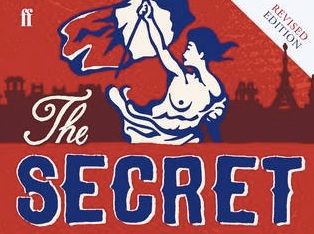
SLoF Revised cover

An extract from the first of the new chapters for the revised edition of The Secret Life of France, just out…

Everything in its Place

When this book was first published in 2009, the two most valid criticisms were offered by both English and French readers. The first was that Paris isn’t France and the second was that the bourgeoisie isn’t everybody. Both remarks reveal the limits of my own experience. In leaving Paris for the Cévennes where I have been for the past four years, I hope that I have broadened my horizons at least a little.

Few of my Parisian friends have ventured to the far-flung wilderness that is the Cévennes. Most prefer to see me when I come to Paris for work or to see Ella and Jack, but those who have paid me a visit bring back a simple verdict:

‘Elle est completement folle.’ (She has completely lost it).

We’re so secluded here that I’m always amazed – even if we’re expecting a visitor – when someone knocks on our front door. ‘Why?’ is the question which often greets me as they step over the threshold. Not sure, is the answer to that.

Seven years after the end of my marriage to Laurent, I found myself for the second time around with two children under five. I was now forty-three, however, and not twenty-three. Perhaps the aging process was luring me to the bosom of nature. Perhaps I did not feel I had the stamina to relive Paris’s dusty, joyless playgrounds or usher the poor blighters through the gates of yet another of her overcrowded, competitive schools. I was also aware that Joe, the English father of our two little boys, Joshua and Gabriel, had not really taken to the bourgeois dinner party circuit I had inherited from my marriage to Laurent.

On the surface, this new life of mine bears no resemblance whatsoever to my life in Paris. There is here a deep love for and identification with the land. The French word ‘terroir’ – a charmed word, used increasingly as a brand to appeal to Parisian tastes – can mean the local or the regional, but also ground, terrain, land, soil, earth. It has no equivalent in English. The word induces a dewy- eyed yearning in most Parisians, many of whom like to picture rural life as it appears on TV advertisements here, sanitised and idealised, with rugged but handsome peas- ants in red neckerchiefs sharpening their pocket knives, or olive-skinned beauties serving at long trestle tables piled high with ‘les bonnes choses’. I’m always amazed by the gulf between Paris and the countryside and by how little Paris knows, or cares to know, of peasant life.

A year after we had settled into our house, Laurent lent us a DVD of a documentary about rural life called La Vie Moderne (Modern Life, 2008). Some of this critically acclaimed trilogy is set in the Cévennes, not far from us. Laurent loved this film directed by Magnum photographer Raymond Depardon, a farm boy who, like many of his generation, ran away in the sixties to seek a better life in the bosom of Paris’s left-wing intelligentsia. The film was selected at Cannes and for a while le tout-Paris rhapsodised about this haunting portrayal of the harsh realities facing ‘La France Profonde’. At last they had a window on what peasant life was really like.

When I saw it, I was appalled. Contrary to what I had read in both the English and French reviews, I found Depardon’s narrative strategy and interview techniques to be brutal and condescending. I felt no ‘richness of fellow feeling’* as he leveled his alienating, wide-angle lens at the men and women whose lives he had decided to scrutinise. No Paris-born director would have got away with this disdainful study of rural life, in which the ‘paysan’ subjects all come across as mute, depressed or simple-minded. One interview in particular, which featured a farm labourer on a tractor, epitomised to me the cruelty of Depardon’s gaze. The young man had no wish to talk to the camera, yet it remained pitilessly trained on him for many long minutes. Too polite to move away, he squirmed like an insect pinioned by an entomologist.

How is it, I asked myself, that only a few kilometres down the road from the lives and locations in this film, my farming neighbours are expansive, funny and broad- minded? Perhaps Depardon has simply learned over the years to give his adopted class what it wants: proof of its own superiority.

I do not feel that the gulf is as wide as both sides believe. As a foreigner I can’t help seeing in this austere and little known corner of France, even among people who eke out a living from the land, many of the traits that I love about my Parisian friends: a passion for ideas, a belief in politics, a partiality to abstract discourse and a marked lack of interest in money as a goal in life. I found the same belief in the collectivist ideal put more readily into practice here in this isolated community, through the thriving collective lives of both the ‘commune’ and of the local school, where Joshua and Gabriel are learning, in their own some- what contrary fashion, to be soldiers of the Republic.

People here are attached to their history and to the outsider status that goes with it. The well-wishing grand-son of a previous owner of this house dropped by shortly after we had moved in with documents and tales relating to its past. He gave us a much faded and folded letter addressed to a Monsieur Andre who had once lived here. It was dated according to the revolutionary calendar, ‘le 13 Fructidor, An 2,’, which would have been the late summer of 1794, a month after the fall of Robespierre and his ‘Terreur’ (Reign of Terror) with its mass denunciations, its popular tribunals, its revolutionary committees, and all the attendant horrors of the totalitarian state. The local mayor, trusting in our predecessor’s ‘civisme’, was requesting his presence for jury duty.

The old man then went on to tell us about his beloved grandfather, Abel, who cherished our house, spent every day of his retirement walking its terraces, and planted many of its finest chestnut trees. He was, for his sins, mar- ried to a woman who preferred living in the valley to the high ground where this house is set. She managed to play for time and Abel died at the end of the Second World War still struggling to salvage the place from ruin. During the war Abel had employed a Jewish man from Poland whose family was being hidden by a friend in a nearby hamlet. The man had worked with him restoring some of the dry stone walls that sustain our terraces, which down here are called faïsses or bancels. I often picture the refugee walking this precipitous landscape with its carefully tended chestnut orchards and its rushing streams and wonder how he felt here among these reserved people with their quiet generosity, and what became of him and his family after the war. I’m told they left and never returned.

The Occupation feels close to many of my neighbours and it seems to have moved closer to us too. On the wall of our sitting room, written in red paint by the Italian migrant workers who stopped here in Abel’s house in their flight from Mussolini, are the words:

Ogni cosa a suo posto

(Everything in its place)

The words are written on a patch of flaking lime render but there’s no question, for either of us, of re-plastering that wall. The message reads as a kind of sampler from a vanished past, a warning against the modern world and its insatiable appetites

(…)

* Guardian, film review by Peter Bradshaw, Friday 3 April 2009.

SLoR Revised cover 2

Belle et Boring

DSK's eyes

Belle et bête
Marcela Iacub
Stock, 128pp, €13.50

There are moments when I feel that as long as I live and as hard as I try, France will remain forever a mystery to me. Reading Marcela Iacub’s book Belle et bête, a fictionalised account of her six-month-long love affair with Dominique Strauss-Kahn, was one such moment. Hailed as it was by Le Nouvel Observateur for its “literary power of stupefying proportions” and described by Libération as a piece of “experimental literature as violent as that which she experiences, inspired by a spirit of risk”, I was prepared for something remarkable. This is how the book opens:

You were old, you were fat, you were short and you were ugly. You were macho, you were vulgar, you were insensitive and you were mean-spirited. You were egotistical, you were brutish and you had no culture. And I was mad about you.

That, more or less, is how it goes on, for 120 pages or so. It’s an unrepentantly verbose and embittered apostrophe to a man already disgraced, which leaves you feeling a mixture of distaste, exasperation and boredom – the kind of boredom, as I realised when I’d got about halfway through, that you might feel listening to a particularly long closing speech by an overweening barrister.

Iacub was indeed a barrister, back in her native Argentina, before she moved to France in her early twenties and became a brilliant jurist specialising in bioethics. More recently, she has made a name for herself as a clever, provocative columnist for Libération, where she writes mostly about sexual politics, often lamenting what she sees as the widespread erotic impoverishment of contemporary society.

When DSK was arrested in New York, she leapt to his defence, publishing a book entitled Une société des violeurs? (“A Society of Rapists?”), in which she offers a fierce criticism of the feminist witch-hunt that followed. He now rues the day that she ever became his champion.

As you can probably guess, Belle et Bête is not an apology for Strauss-Kahn – any doubts about this are swept away by the presence of an insert at the front of the book attesting to his libel suit against the author – nor is it, despite Iacub’s frequent assertions to the contrary, a love story. I, at least, could not detect any love in it. Perhaps that is because her approach is scientific and theoretical. “I wanted to create a theory of love from my situation,” she writes. “[A] nun who falls in love with a pig. A nun who turns away from the grandeur of divine love to wallow in filth.”

At this point, I should explain that there are two metaphors running through Iacub’s book – one of her lover as a pig and the other of herself as a saint or nun. And that they recur on every page. The other motif – that of Iacub’s saintliness – is built around the following assertion: “I was in love with the most despised being on the planet.”

From this point, we realise that, apart from his piggishness, we are not going to learn much about Strauss-Kahn. The book, rather, is about Iacub; her decision to defend an underdog and then submit to his (inevitable) advances. Above all, it is an ode to her writing life, which she likens to a form of auto-eroticism: “My writing. That operation, which consists in the transformation of my self into the object of my own passion.”

Although the text is littered with the most potent abstract nouns – truth, desire, happiness, love – the effect was to leave me cold. I could not believe – as I waded through all that unbridled narcissism (Iacub likens herself to Voltaire and Victor Hugo) – in her so-called passion. The account felt throughout not like a novel but like a very dry, very calculating exercise: “The only thing left to me in order to forget the pig and to have no further dealings with you was not to kill you but to write a book.”

In the penultimate chapter, the author describes a scene in which her lover tears off her left ear and eats it, then faints, in a spasm of ecstasy, into a pool of his own semen:

Thinking about it, I realised that my love  for the pig had died at the very moment he had mutilated me. As if my left ear had been the repository of my feelings and that without it I could no longer feel anything for him.

This scene, like all the erotica in the book, is, of course, purely symbolic. The problem is that the material never rises above this emblematic register, nor does it stoop to anything resembling experience. By the time I had dragged myself through the final chapter, I was, just as Le Nouvel Observateur had predicted, utterly stupefied, both by the book and by the praise it had received.

A version of this review appeared in The New Statesman

À paraître…

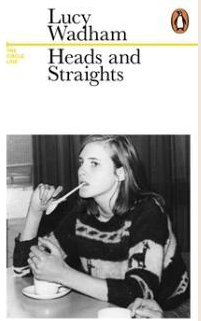
An evocation of London, explored through the Circle Underground Line. To be published in March 2013.

Brought up off the King’s Road in the seventies when punk was in full bloom, Lucy is part of a family that comes in the wonderful tradition of English eccentrics. In Heads and Straights, she creates a funny, moving account of a group of people eager to escape the confines of class. Through interlocking tales of their extravagant and often self-destructive journeys away from the Circle line stops of Sloane Square, South Kensington and Gloucester Road, Lucy evokes the collision between conformism and bohemian excess and the complicated class antipathies that flourished in that particular time and place. In the end we are left wondering – is it ever possible to escape, or do we, in our travels, simply loop back on ourselves?

Why did you choose the title Heads and Straights?

The title echos 1970s drugspeak and the language of teenage rebellion. For my three elder sisters the world, in those days, was divided not along class lines but between those who experimented with drugs (Heads) and those who didn’t (Straights). In the four decades since then the word ‘Head’, in family folklore, has come to include anyone, of any age and from any walk of life, who likes to live dangerously.

Why did you choose this cover image?

This picture of me aged fifteen was taken in the canteen of my sixth form college in Kings Cross just after I had enrolled. It was there in that large, noisy room that I first made my visceral encounter with the big wide world beyond my safe and uniformly middle class corner of Chelsea and Kensington. I was terrified, feigning nonchalance (with that spoon), feeling conspicuous (in that jumper) and inwardly praying for acceptance.

http://www.penguincatalogue.co.uk/hi/press/title.html?catalogueId=251&imprintId=1059&titleId=17920

At Last…

Image

The Secret Life of France is to be published in French! In April/May 2013. The publishers are Hugo et Cie who offer a small but eclectic list of titles, ranging as far as I can tell from the serious, to the light, to the tastefully saucy.

Any suggestions for titles in French would be very welcome.

As would any suggestions for the additional chapter on post-Sarkozy France that I intend to add to the French version.

Thanks so much.

LMW


The End of the Affair?

With the publication of a new biography of Francois Hollande’s girlfriend, Valerie Treirweiller, the French public will, whether they like it or not, discover yet another layer in the complex erotic saga that is their president’s love life. “La Frondeuse” (The Rebel) reveals that in the early days of his affair with Trierweiller, Francois Hollande shared his mistress with Patrick Devedjian, a political rival close to Sarkozy. Both Trierweiller and Devedjian are suing authors, Christophe Jakubyszyn and Alix Bouilhaguet for “defamation and infringement of privacy,” but this will not stop the news from spreading across the globe, nor will it help to explain French sexual mores to the rest of the world.

The euphemistic language in which the story of this ménage a trois is recounted reveals all by itself the gap between France and Britain when it comes to infidelity: “At the time,” write the authors. “They (Trierweiller and Devedjian) were both committed (married). They were both hesitating about making the big leap and changing their lives. Patrick Devedjian dithered, so much so that Valérie Trierweiler allowed herself to be courted by another man from another political obedience: Francois Hollande. Little by little the relationship with Hollande took precedence over the other, particularly after the (Trierweiller’s) ultimatum in 2003 to which Devedjian did not give in….It was a bit like the Jules et Jim story. The two men preserved a great respect for one another.”

Far from suggesting depravity the authors convey a certain sympathy for the participants of this love triangle, invoking Francois Truffaut’s 1960s masterpiece ‘Jules et Jim’, in which Jeanne Moreau attempts to share her bed and her life with the two men who are in love with her. Both in print and in interviews, Trierweiller’s biographers carefully avoid judgemental language of any kind. The reason for this is that, despite the constant pressure from foreign media, and from social networks like Twitter, the French are still deeply attached to the lure of secrecy and mystery when it comes to the affairs of the heart.

Valerie Trierweiller is unpopular in France, not for her adultery so much as for her perceived vulgarity in dealing with it. Known for her public outbursts of jealousy towards her boyfriend’s ex, Segolene Royal Trierweiller’s famous Tweet in support of Royal’s rival for her parliamentary seat, tipped the French public into a deep aversion from which it is unlikely to budge. Disposed, as people are in France, to look favourably upon beautiful, well-dressed women, they could not forgive Trierweiller for letting them down with such a lack of savoir vivre. Widely referred to as ‘L’hysterique’, Trierweiller is a kind of anti-model of the presidential mistress, who is traditionally expected to be a woman of elegance and discretion. Some of the online comments about the news of her upcoming biography offer good insight into the general view of Trierweiller in this country:

Unbelievable!!! Now she’s “authorising” a biography…Tweetweiller really has hit rock bottom when it comes to ridiculousness and vulgarity. So this unpleasant and insipid courtisane wishes to show us the emptiness of her existence. She really wants to ram herself down our throats!

The Rebel??? The Arriviste would have been more appropriate for Ms Tweetweiller.*

The emphasis is not on Trierweiller’s love life (or on the fact that she had a long-standing affair with a married man) – that is entirely her business – but on how she manages it. She is castigated not for being an adulteress but for being a shameless self-publicist.

There has been a shift, however, in French attitudes towards infidelity and the publication of this biography, despite the circumspection of its authors, is proof of that. There is a growing sense that the public have a right to know about the private lives of their public figures, and an increasing feeling of unease when it comes to extra-marital affairs. Ever since the Dominique Strauss Kahn case, it is as if all the fun has been slowly leaking out of the party. Described for years by the French press as ‘a ladies man’ DSK was suddenly, in the light of the US media, a potential rapist. The word libertine, which had, certainly in Parisian circles, been seen as a compliment, was now tarnished forever.

Contrary to an article on the subject in The Daily Mail by the irrepressible Stephen Clarke, the British divorce rate is actually higher than it is in France, where fewer marriages end in divorce (38% as opposed to 42%). This is partly because marriage itself is on the decline here. The old model of staying married at all costs is no longer popular. Indeed, Sarkozy and Cecilia were the first married couple in the Elysees to break that mould. My own French children, now 24 and 26, both aspire to marital fidelity as do their friends and they tell me that they would rather not marry at all than accept infidelity.

* Comments on an article in Elle Magazine 30/09/2012

http://www.elle.fr/Societe/News/Valerie-Trierweiler-sa-biographie-sort-en-octobre-2207956

Reporting live from the moral high ground

The Chevaline Murders

Yet again a news story and the particular nature of its coverage seem to reveal the chasm between British and French worldviews. For once, though, the issue at stake is not our respective attitudes to sex, but to murder. Today’s Daily Mail headline on the ‘Chevaline killings’ as they are referred to here in France, offers a hint of the fairly widespread British indignation at the perceived disconnect between our two nations: “Story of the brutal murders of British family driving in the Alps buried by the French Press.”

Having suggested that the French media are somehow trying to ‘bury’ the story, the article goes on to infer widespread callousness in the face of mass murder: “The shocking Alps massacre was dismissed as nothing more than a trivial news item by the French media.”

The evidence for these deductions is two-fold: (i) in the aftermath of the crime, no French papers chose to lead with the story but ‘relegated’ it to the later pages and (ii) that the murders have been widely described as a ‘fait divers’, which the Mail obligingly translates for us as ‘a trivial news item.’

Later in the article there is actually a suggestion that one reason for the ‘relegation’ of this story might be that the murder victims were foreigners. But no. The Mail goes on to observe: “Even when one of the victims was on Friday named as French local Sylvain Mollier, a father of three, only local papers and national tabloid,  Aujord’hui (sp.) put the story on the front page.”

So it is that in the space of a few lines we get the heady whiff of French dishonesty, callousness, and xenophobia. One would be forgiven for assuming that this is just The Daily Mail succumbing, as usual, to the delights of French-bashing but today’s Guardian carries the almost identical headline: “How French press buried the story.”

It would probably be useful to start by explaining the term, ‘fait divers.’ It does not actually mean ‘trivial news story’ but refers to the section of a newspaper that is traditionally devoted to anything that cannot be put into the various sections that tend to divide French newspapers: National, International, Politics, Economics, Sport etc.  In the Fait Divers section, you will find mostly ‘tragic’ news stories such as crime, accidents and robberies. More than French callousness, the location of the fait divers section points to France’s entrenched preference for ideas over reality and its slowness to modify its traditions.

British coverage has once again shown the French how deeply they are disliked across the Channel. L’Express notes with a kind of brave resignation, the hostility and schadenfreude behind much of the reporting of this story in Britain and includes a link to Colin Randall’s rather thin exposé in The Telegraph of “the violent underbelly beneath France’s bucolic charm.”

Surely no one seriously believes that French people are any less shocked and appalled by this crime than their British neighbours? France certainly has much to learn from Britain when it comes to investigative reporting but let’s not use this as an excuse for yet another moral campaign.

A version of this piece appears in today’s Independent

Woman on the edge…

wikipediaOn May 2nd, between the first and second rounds of the presidential elections, Francois Hollande’s partner, Valerie Trierweiler gave an interview to the women’s magazine, Femme Actuelle. A smiling head shot of the future premiere Dame de France illustrates the piece and confirms her photogenicity and her radiant status as a woman in love. With hindsight is is possible to discern, between the lines of this apparently innocuous interview, the somewhat pathological mindset that will lead to Trieweiler’s recent disgrace. For that is how her ‘tweet‘  in support of Olivier Falorni, Segolene Royal’s rival for the parliamentary seat in La Rochelle, has been widely received; as a disgrace and an outrage to the political process. In the aftermath of the tweet an anonymous source at the Elysees Palace confided to Le Monde journalist, Thomas Wieder: “I’m stunned. I expected to have to deal with governmental, not conjugal crises.”

In the Femme Actuelle interview Trierweiler “confides” that Francois Hollande has complete faith in her, “except for my tweets!” she adds. “Some would prefer me not to respond so frequently on this social network, but everyone respects my freedom. I have a strong character and I won’t be reined in.”

It’s all here, isn’t it? The familiar invocation of the heady word ‘freedom’ and of course ‘the strong character’ to justify bad behaviour. As if the French public is still just as in thrall as it ever was to the myths and excuses of LURVE. The problem is, that particular bubble has burst. DSK did it in New York with his unbridled phallus. For years, under cover of expressions like l’homme a femme (ladies man) or chaud lapin (no satisfactory translation available) he managed to get away with being quite simply out of control with women. The way the Valerie Trierweiler tweet has landed is a further demonstration that public opinion in France has shifted. Love can no longer serve as a viable defense for hysterical and obsessive behaviour, for however vehemently Trierweiler denies that the tweet was triggered by jealousy of her boyfriend’s ex, no one is fooled. Her rivalry with Royal has been widely documented. As Elise Karlin, journalist at L’Express puts it in her article entitled ‘Valerie Trierweiler: The Ministry of Envy,’ “Nothing can explain taking this public position except the outrageous and irrational jealousy of a woman towards the person who came before her in her man’s heart,” a jealousy  that, according to one of Hollande’s close supporters, polluted the entire Presidential campaign.

Six weeks after her interview with Femme Actuelle, Trierweiler goes on to Twitter and her hand shoots out. In pressing “enter” she not only compromises her own credibility by breaking her promise of political neutrality, she also publicly contradicts the President who has already given, however reluctantly, his support for Royal’s candidacy in La Rochelle.  Later in the  interview she says, “I would not allow myself to offer him my opinion on the nomination of one or other candidate…At his side I am quite simply his woman, like any woman in love.”

Trierweiler goes on, not for the first time, to boast her discretion: “People come up to me (at political meetings) and thank me or congratulate me for my discretion. They say I have the right attitude, of one who is there but in the background…” She often describes herself as ‘shy’ and ‘private’ but she also likes to trumpet her love for Hollande from the rooftops. She demanded that he kiss her on the lips in public to mark his commitment to her, insisted, even during the height of the presidential campaign that his evenings be kept free for time together, and on the night of his victory organised, without telling him, for their song to be played on the podium: Edith Piaf’s highly romantic La Vie en Rose.

I can have sympathy for Trierweiler’s feelings. Let’s face it, we’ve all been there. Or at least I have. The mad, needy, utterly unreasonable behaviour that can often come with loving someone. In some ways you have to take your hat off to her for the sheer lunacy of her behaviour. She is playing out for all to see the agonizing paradox of the love state, the soi-disant independent woman utterly enslaved to the object of her affection. It’s just a pity for her that this particular archetype has lost its kudos, even in France.

Playing with Fire

18% to the National Front… Sarkozy’s evil strategy of making eyes at the extreme right all the way through his campaign seems to have backfired. In vain did people in his party warn him to stop banging on about immigration and halal meat every five minutes and try to talk about policy. This morning you can be sure that the president was ruing his decision to ignore them and follow the advice of his eminence grise, the dark lord, Patrick Buisson. This is a man who was suckled on Charles Maurras‘ proto-fascism, is admired as a strategist by Jean Marie Le Pen and who earnt his stripes as a columnist with the extreme right weekly newspaper, Minute. “I owe my election to him,” Sarkozy once declared. Buisson’s tactic in 2007 was to siphon votes from the National Front and Philippe de Villier’s  Movement Pour la France. This strategy worked once. Why, Sarko must have asked himself, shouldn’t it work again?

The big difference is that this time the electorate knew him. After five years, they felt they knew him intimately. And they detested him. It was a grave mistake of Sarkozy’s not to try to dissimulate his petulant, dictatorial personality a little behind his track record – his reforms to the civil service, his handling of the euro crisis during his term as European President, of the Russia Georgia conflict and his decisive action against Libya. But his deep narcissism and childishness would have made it impossible for him to do this.

So there we have it, 18% for Marine Le Pen. There will be a kind of perverse delight at this result, at least in the little corner of rural France where I live. Round here Hollande is seen as a traitor to the left. In my nearest village it was his electoral portrait, not Sarkozy’s that was daubed with a devil’s moustache. (For my neighbours Sarko is below contempt.) Yesterday’s terrifying result will reassure people that anti-fascism is not an irrelevant, obsolete struggle. It will prove to those most fearful of the advance of consumerist vacuity that ideology is not dead.

wikipedia

To Change or Not to Change…

Notes from a Rebel Island

Many of us fall in love with Corsica but it rarely lasts. The French call her l’Ile de Beauté, which helps mask their unease about a place of perpetual insurgency, unrest and superstition. I was smitten on sight, for its beauty, of course but also for its atmosphere – the foreignness, the impenetrability – and for what I would have to call its “edge.” But what do we mean by this? ‘An intense, sharp, or striking quality?’ A grittiness? A lack of compromise? Whatever it was, I knew that the island would remain forever mysterious to me and that – like Dorothy Carrington who spent half of her long life writing about the granite island’s archeology, its history and its people -I would always be an outsider. This knowledge of your perpetual exclusion does not stop you from trying to understand. On the contrary.

I remember the first article I wrote about Corsica, in February, 1996. I was supposed to tell the readers of The Sunday Telegraph how the independence movement, the FLNC was leading Prime Minister Alain Juppe on a merry dance. The organisation had recently held a nocturnal press conference in the maquis around the village of Tralonca in the rugged north of the island. Several hundred militants, wearing cagoules and armed to the teeth had brandished rocket launchers and machine guns for the cameras while dictating their terms to Paris. A source at the ministry of interior had told me that local police had been made aware of the meeting beforehand and had even shown up to take down registration numbers.

As I stepped off the evening flight to Ajaccio and greeted my contact from the PJ (judiciary police), I had so many questions in my head that I had no idea where to begin. As it turned out, the policeman (let’s call him Cesari) tended to meet my questions with as enigmatic an answer as possible, or else with another question.

It was unseasonably warm so Cesari drove us to an excellent fish restaurant on the bay of Ajaccio, or Aj-axe as he pronounced it. (Like the characters in The Sopranos, the Corsicans foreshorten their suffixes). Cesari asked me if I had ever tasted sea urchins, which I hadn’t. He said they were particularly fleshy at this time of year and ordered a bottle of white wine to go with them. As I prepared my first question about the Tralonca fiasco, an old man dressed in a white suit with a black, mostly unbuttoned shirt came over to our table and clapped Cesari on the shoulder.

“It’s Cesari isn’t it? The Cesaris from… (He mentioned some village).”

“No. We’re from…(The policeman mentioned another village).”

In Corsica, as I would learn, the individual is nobody. You are only somebody if you are so-and-so’s son or daughter. Disappointed, the man in the suit turned his attention to me. Cesari duly introduced me as a member of the British press and the old man graced me with a baisemain.

“Ah yes,” he said, pointing at the policeman. “I remember. You raided my house not long ago.”

I was beginning to feel uncomfortable.

“Yep,” Cesari replied calmly. “That was me. Just doing my job.”

“Of course, of course but for some sorry business about possession when we both know that every old woman on the island has a Beretta hidden in her dresser.” He opened his hands. “I mean, come on. It was a pop gun!”

Cesari laughed and began folding and unfolding his napkin. The two men exchanged pleasantries but the old man had made his point and he returned to his table.

I asked who he was.

“He’s a local politician,” Cesari said with a smile. Apparently the ‘pop gun’ was a 9mm SIG-Sauer.

Later, Cesari dropped me off at my hotel. I went up to my room and began writing notes for my first novel, Lost. It would be a thriller, set on Corsica. The man in the white suit would become Coco Santini, the villain and Cesari lieutenant to my jaded anti-hero, Antoine Stuart.

I don’t know why I’m telling you this. A need to get away from DSK perhaps, and from l’actualité in general, and the desire to share that lurching motion that goes on between the real and the unreal, between fact and fiction.

Pour la traduction francaise de cet article paru dans Le Financial Times de Londres, voir Le Courrier International du 19.07.2012

The DSK case and the Sisterhood

Although I have always called myself a feminist, I was, in the days following Dominique Strauss-Kahn’s arrest, unable to join the sisterhood in condemning a man — albeit of dubious moral record — for the crime of attempted rape before he had actually been found guilty.

Having written a piece (that was never published) attempting to explain the French outrage at the “perp walk” and public shaming of someone theoretically innocent until proven guilty, I ducked the flak and watched the case unfold in silent bafflement that my own views could be so at variance with those of my fellow female journalists in Britain and America.

Have I gone native, I wondered? Have I been corrupted by French libertinism?

I would not describe myself as a libertine.* I believe in the wisdom of monogamy for optimal happiness and I think that transparency in a relationship is a desirable goal. I do not, however, underestimate the difficulty of marriage and I refuse to judge others for a failure to live up to the above standards.

I also accept the notion that it is possible to be happy in what used to be called “an open marriage,” and although that would not be my choice, I refuse to judge others if it is theirs.

Knowing, as I did, Strauss-Kahn’s reputation as a sexual predator and philanderer, I was not drawn to the man, even before he went to America and I doubt that I would have voted for him, but I still felt queasy at the sight of those shaming placards outside the courtroom on the day of his release, or of the abusive cry of: “DSK, you’re a sick bastard and your wife is even sicker.”

Clearly I have little stomach for the witch-hunt because I was also shocked by a column in Britain’s Daily Telegraph that attacked even Strauss-Kahn’s long-suffering wife, Anne Sinclair, for her decision to stand by her husband. Allison Pearson’s tirade was entitled “When forgiveness goes a step too far.”

“Forgiveness is good,” writes Pearson. “Even so, the nauseating sight of French heiress and journalist Anne Sinclair standing by her man, Dominique Strauss-Kahn, sets a new low. The former IMF chief may have been acquitted of attempted rape against a hotel maid, but is there anyone who can look at that swaggering silverback primate without a shudder? Ugh … Shame on his indulgent wife.”

Why is it that this woman feels she has the right to condemn this couple in this way? What is it about our culture that makes us so quick to judge, and so quick to blame? Are we all so blameless ourselves that we can be so censorious when our public figures slip from the path of moral rectitude?

I believe that the answer lies in our Protestant heritage. The Catholic practice of confession allowed for sin as an inevitable part of being human. In abolishing the privacy of the confessional and in making the congregation the only moral arbiter outside that of our own conscience, we paved the way for a society in which the media has replaced the congregation in an endless pursuit of moral voyeurism.

No one in France underestimates the horror of the crime of rape. Agnes Poirier — a French journalist based in London whose thankless task it has become to explain her contrary nation to the rest of the world — points out that “It is the shift (from ardor) towards coercion that makes the sex act a public matter. If it is between two consenting adults, it remains a private act.”

She bravely goes on to suggest that cheating on your wife does not automatically make you incapable of doing your job, adding, “but I know that this argument is impossible for most Americans and British to understand.”

Why impossible? Surely we can all agree that sex is a complicated business, that one man or woman’s ecstasy is another’s nightmare and that judging others carries the very real risk of being judged ourselves.

Surely this case proves how dangerous these trials by media are? We all thought we had the perfect victim in Nafissatou Diallo. She was poor, black and female. Strauss-Kahn was rich, white and male. It was a no-brainer. And yet here we are with a woman sufficiently dishonest for the case to have been dismissed by a district attorney whose interest it was to see a prosecution.

As French writer and commentator, Elisabeth Levy points out in ‘Causeur‘, we do not know what happened between those two people in that hotel room. And D.A. Cyrus Vance was brave enough to admit that, even at the risk of ruining his chances of re-election.

Levy goes on to condemn the fuzzy logic that Strauss-Kahn must have raped Diallo because he publicly confessed to cheating on his wife. “In other words,” writes Levy, “all adulterous men are rapists. I imagine, dear male readers that some of you may be starting to feel a little uneasy …”

Levy is what I would call an old guard feminist who, like me, laments the battles that now being fought in the name of equality.

For the Strauss-Kahn case has uncovered the divide, not between men and women so much as between old and new feminists. Old feminists, from Genevieve Clark to Erica Jong, believed that the goal was political and sexual freedom for women, not the political and sexual subordination of men.

I cannot accept the idea that womanhood automatically implies victimhood, nor do I think that it is a desirable state of affairs when women see men as the enemy.

The man-hating tirades of my female colleagues are nothing but puritanism in disguise and I suspect that our feminist forebears would be dismayed by the climate of inquisition that seems to dominate relations between men and women today.

* Significantly, there are 2 definitions of the word Libertine. In English we tend to forget the second in favour of the first.

1 a person, esp. a man, who behaves without moral principles or a sense of responsibility, esp. in sexual matters.

2 a person who rejects accepted opinions in matters of religion; a freethinker.

A version of this post appeared on http://www.cnn.com

Pour un article en francais sur l’affaire DSK voir Le Courrier International du 01.09.2011